Case study
Level Up
Designing Engagement Responsibly
Product exploration · Partial development · Not launched
Summary
Level Up was a gamification initiative exploring how to increase user engagement and differentiate Entain’s product experience through progression, challenges and rewards.
The challenge was not simply to make the experience more engaging, but to ensure that the mechanics encouraging participation were designed responsibly.
My Role
As Lead Product Designer, I helped define the product direction, led the design work and coordinated other designers. I also contributed directly to user journeys, high-fidelity interfaces and interactive prototypes, working alongside Product, Engineering and stakeholders.
Key Design Decision
One of our most important decisions was how to balance motivation with responsible participation.
My team and I challenged mechanics that could encourage potentially harmful gambling behaviours. We explored different approaches to rewards, progression, participation limits and transparency.
The resulting design placed greater emphasis on progression, incorporated participation conditions, revised certain mechanics and made rules and incentives easier to understand.
Validation and Outcome
We evaluated interactive prototypes through unmoderated user testing and gathered separate feedback from internal stakeholders.
The findings indicated that progression was understood and rewards and challenges generated interest, but also highlighted a need to simplify the experience.
We refined the journeys, mechanics and information hierarchy, and carried out a second round of validation on the updated designs.
The project resulted in a complete product proposal, designs prepared for handoff, interactive prototypes and some partial backend development. Level Up was never launched.
The experience reinforced my belief that creating engagement requires more than designing compelling incentives. It requires balancing business objectives, usability and user wellbeing.
Level Up
The mechanics explored
Explored as one connected journey
Responsible engagement
Four principles built into the design
Principles
- Progression over constant rewards
- Participation limits and conditions
- Reconsidering mechanics
- Clearer rules and incentives
Full case study
Level Up was a gamification initiative at Entain, exploring how progression, challenges and rewards could create a more engaging and differentiated product experience.
The ambition was to bring several mechanics together into a coherent experience. But working in a gambling-related environment introduced an important consideration: how could we encourage participation without promoting potentially harmful behaviours?
Balancing these two objectives became a central part of our design approach.
Understanding the Opportunity
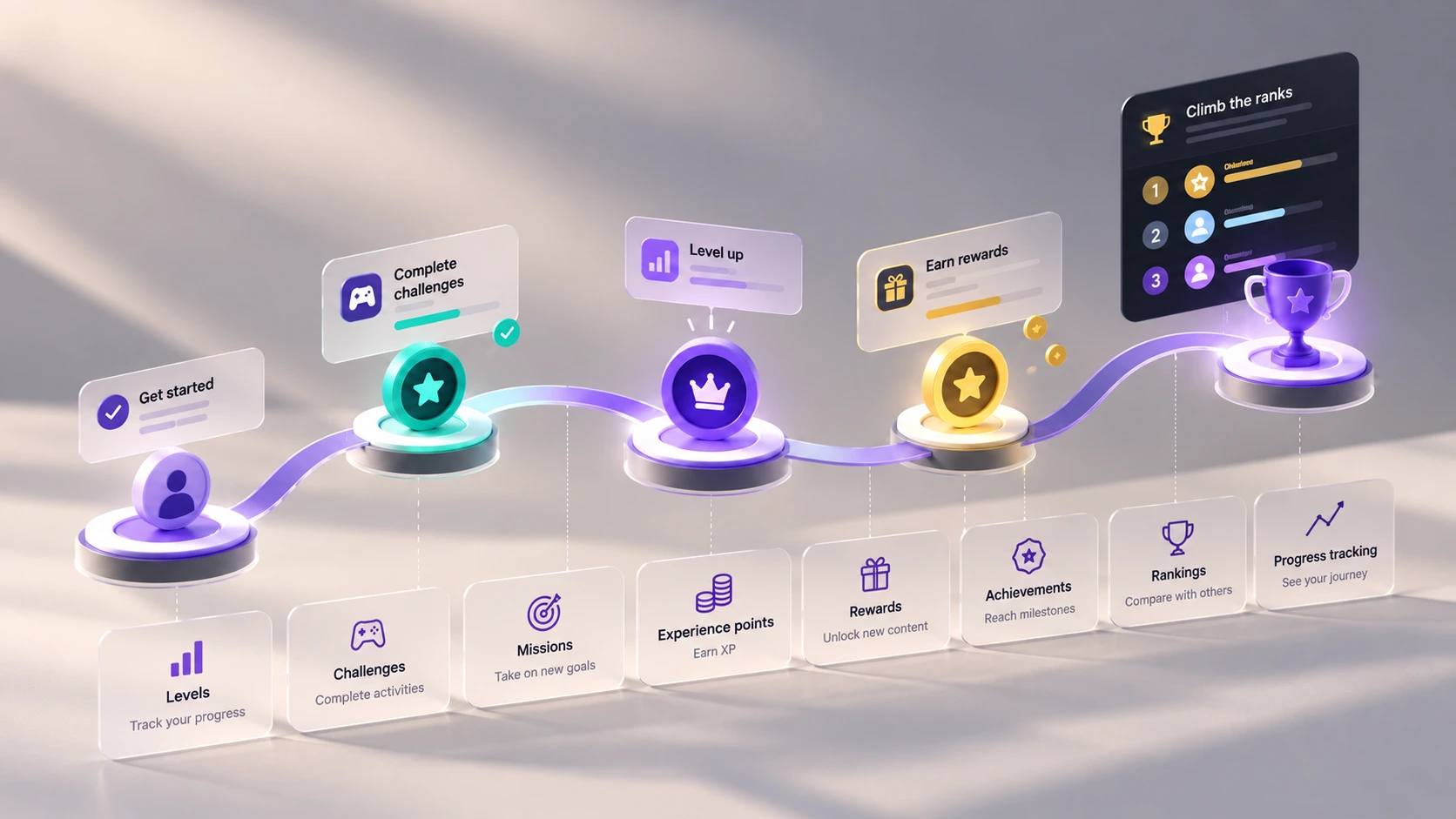
We explored a gamification experience built around levels, experience points, challenges, missions, rewards, achievements, rankings and progress tracking.
Level Up
The mechanics explored
Explored as one connected journey
Rather than designing each mechanic in isolation, we considered how they could work together as part of a connected user journey.
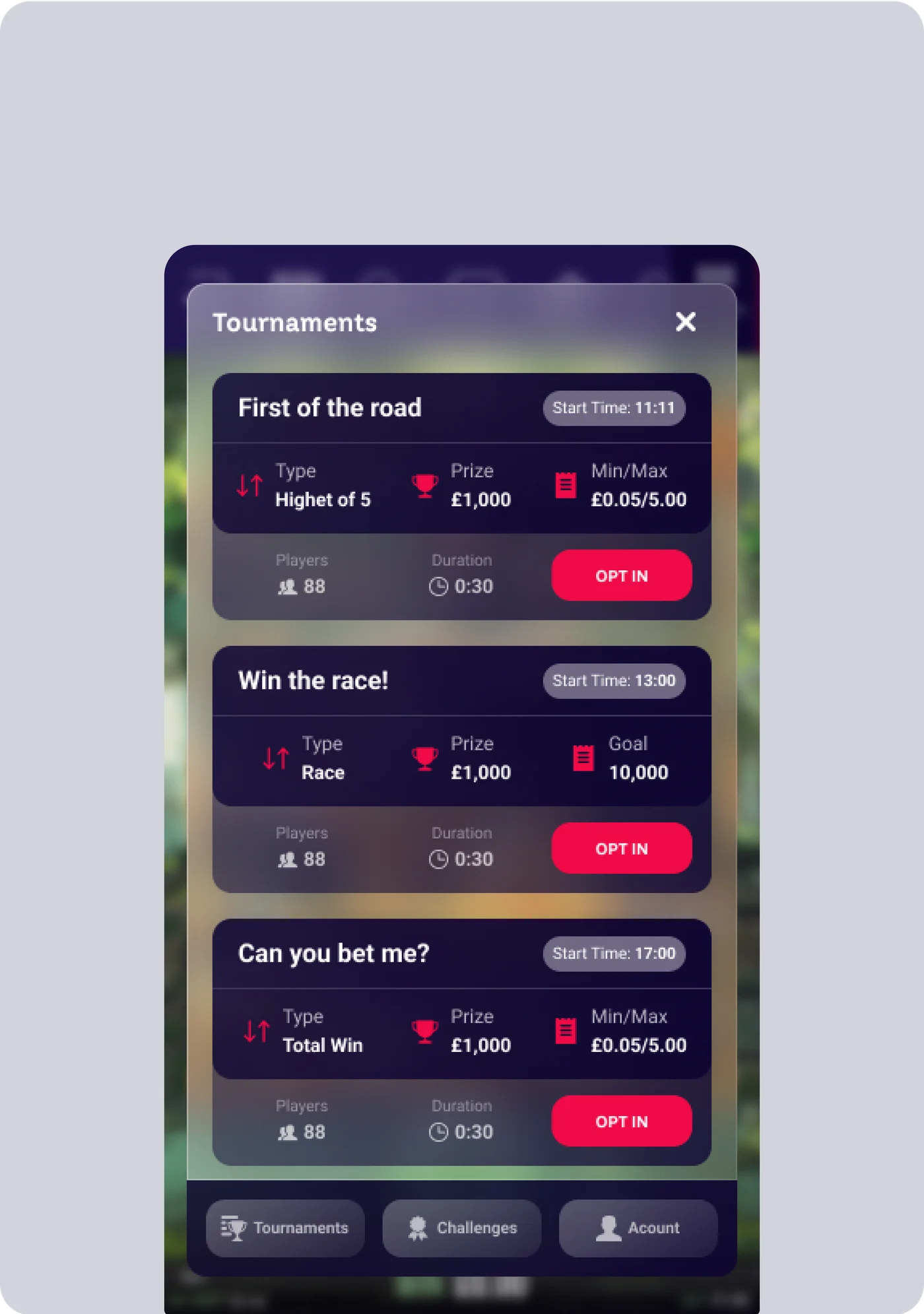
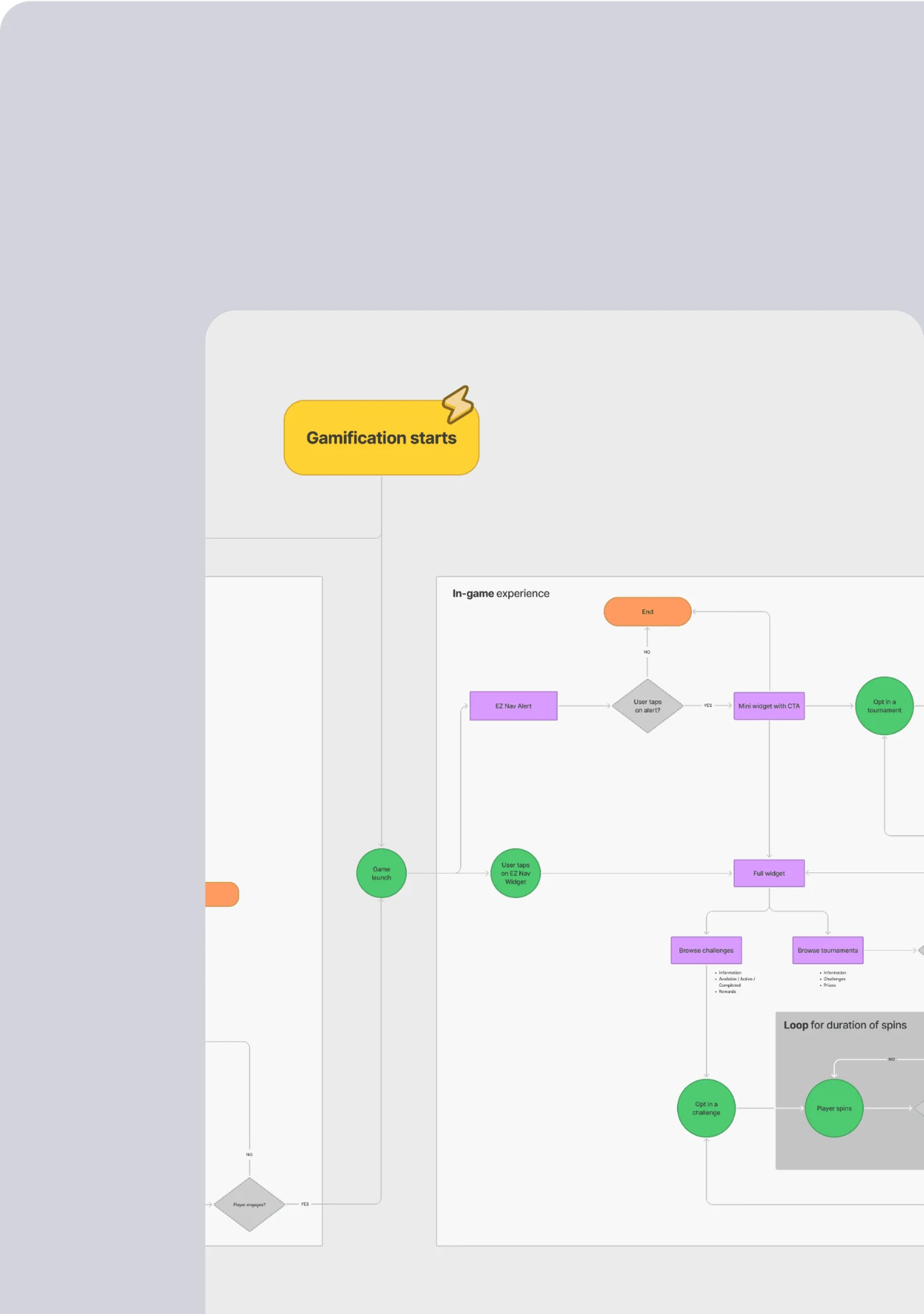
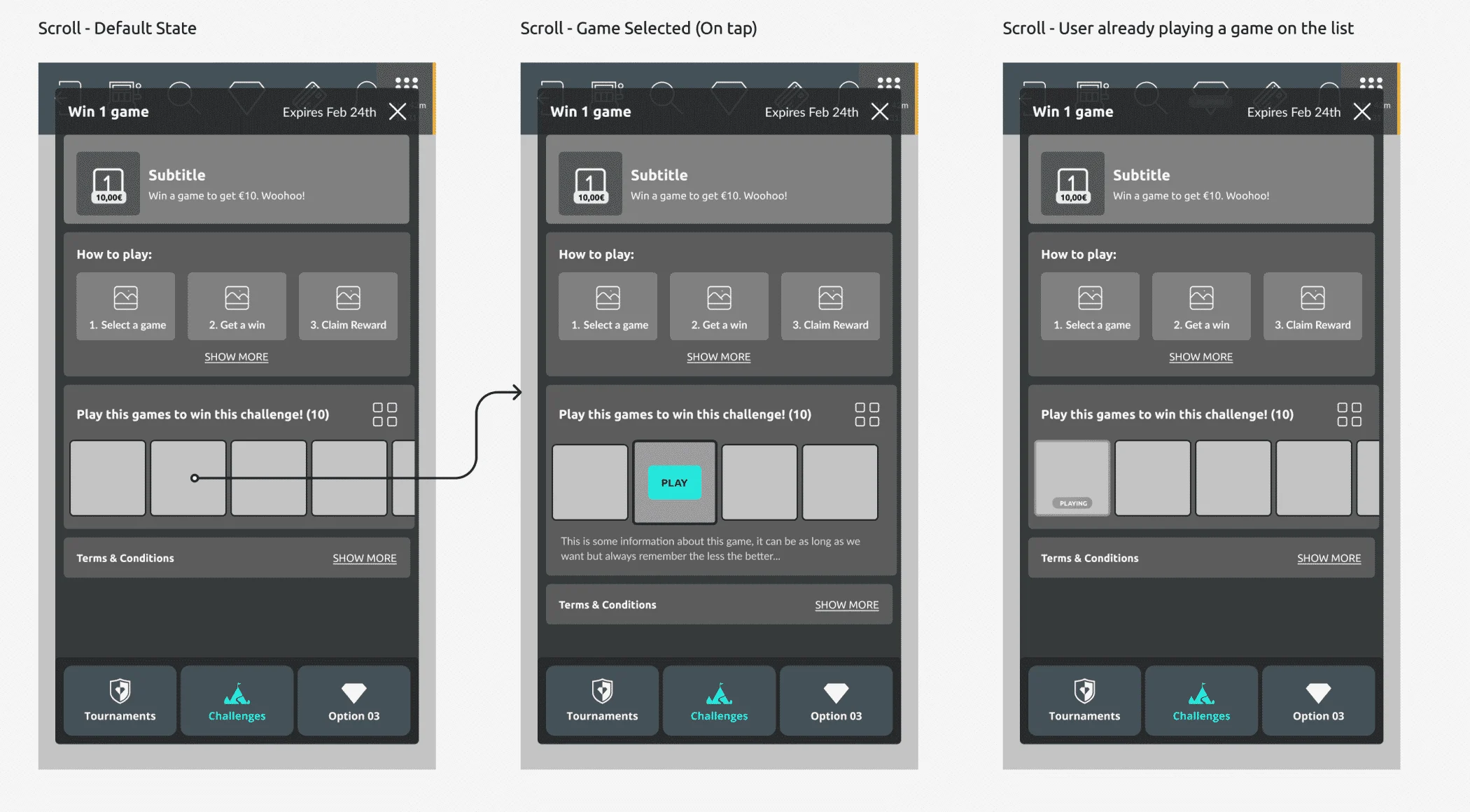
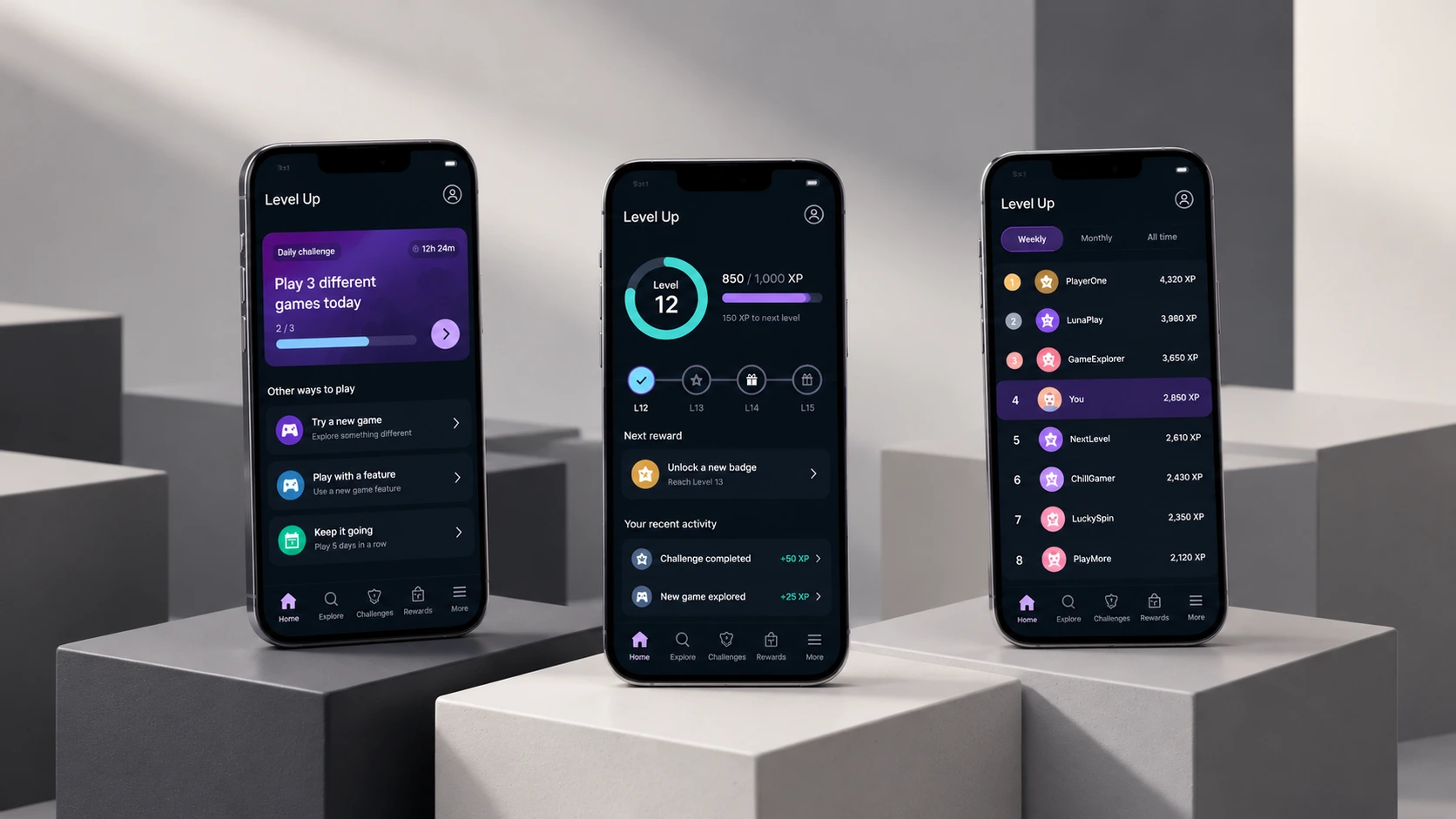
The team conducted initial research, explored concepts and developed high-fidelity interfaces and interactive prototypes.
Two questions guided the work: how could we make the experience compelling and easy to understand, and how could we ensure that the ways we encouraged participation were appropriate for the product?
My Role
As Lead Product Designer, I combined design leadership with hands-on contributions.
I helped shape the product direction alongside Product and stakeholders, led design decisions and coordinated the work of other designers.
My direct contributions included designing user journeys and interfaces, developing and reviewing prototypes, and presenting proposals to stakeholders.
I also worked with Engineering as the project progressed towards partial implementation.
The wider research, design and validation process was collaborative. My responsibility was to help establish the design direction, guide decisions and ensure the experience balanced product objectives with user needs.
Key Design Decision: Designing for Responsible Engagement
Finding the Balance Between Motivation and User Wellbeing
The most significant design challenge was deciding how rewards, progression and participation should work together.
Gamification can create engaging experiences, but in a gambling-related product, the mechanics used to motivate people require particular consideration.
My team and I raised concerns about incentives that could encourage potentially problematic behaviour. We explored several alternatives, including reducing the prominence of rewards, introducing participation conditions, emphasising progression, revising certain mechanics and improving transparency.
Ultimately, we incorporated four principles into the design.
Progression over constant rewards. We made advancement and progress more central to the experience rather than relying exclusively on incentives.
Participation limits and conditions. We incorporated restrictions into relevant parts of the proposed experience.
Reconsidering mechanics. Some ideas were changed or discarded when they did not support our approach to responsible participation.
Clearer rules and incentives. We improved how users could understand challenges, progression and the conditions associated with rewards.
Responsible engagement
Four principles built into the design
Principles
- Progression over constant rewards
- Participation limits and conditions
- Reconsidering mechanics
- Clearer rules and incentives
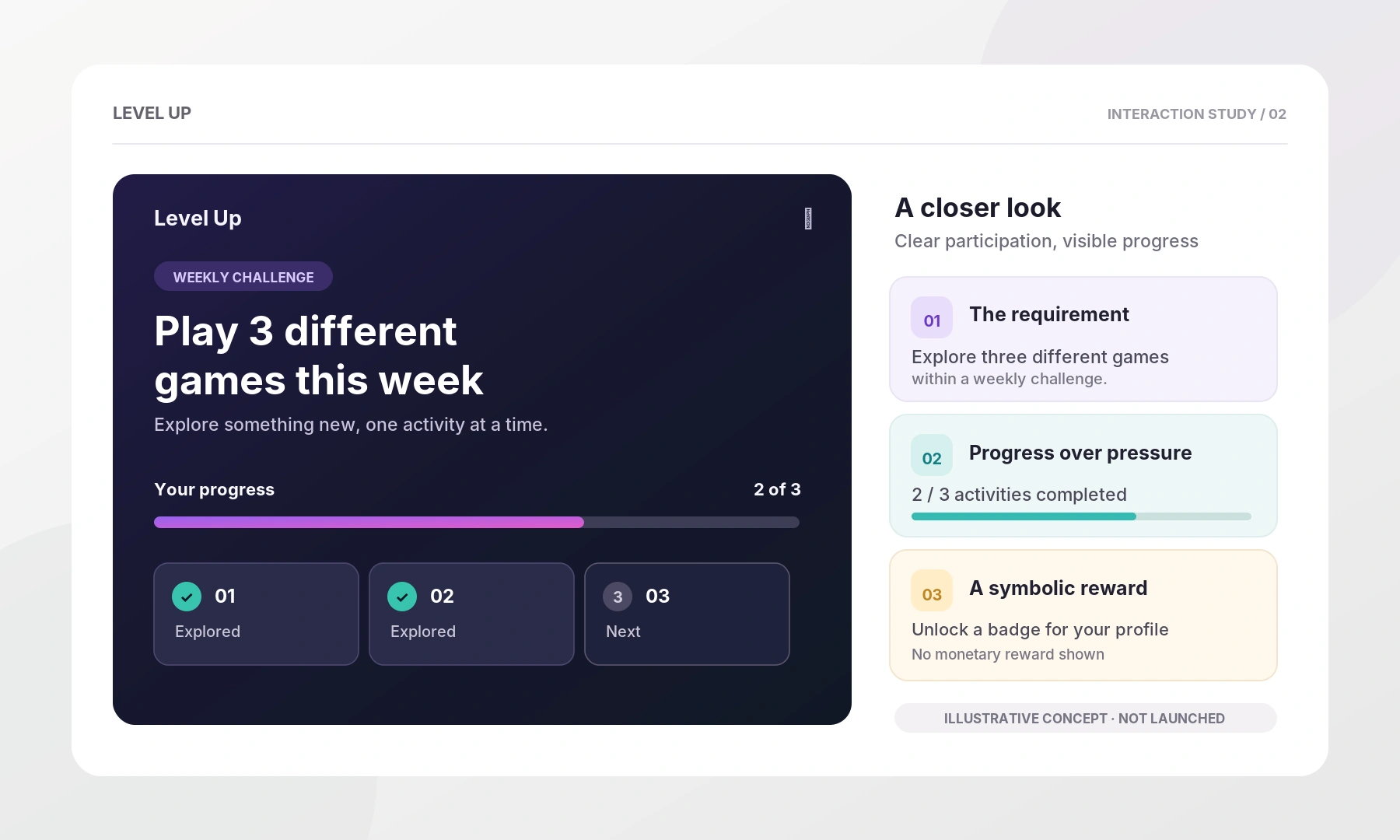
These decisions influenced the level and progress screens, challenges and missions, instructional content, interaction states and visual feedback.
The trade-off was between making the experience motivating and avoiding mechanisms that could encourage excessive participation.
Our aim was not to remove engagement, but to approach it with greater consideration for how product decisions might influence user behaviour.
Testing, Learning and Iterating
We evaluated interactive prototypes through unmoderated user testing, alongside separate reviews with Product and stakeholders.
The feedback suggested that the progression concept was understandable and that rewards and challenges generated interest.
However, it also revealed opportunities to simplify the experience.
Combining insights from the validation activities and internal reviews, the team made several changes:
- Simplified user journeys and gamification mechanics.
- Improved explanations and reorganised information.
- Refined the presentation of challenges, rewards and progress.
- Reviewed relevant interactions against our responsible participation principles.
These changes informed updated designs and prototypes.
The updated designs and prototypes then went through a second round of validation.
For me, the important lesson was that validating an engaging concept also meant being willing to reduce complexity and challenge ideas that initially seemed attractive.
From Exploration to Partial Development
Level Up progressed beyond concept design.
The team produced a complete product proposal, high-fidelity interfaces and interactive prototypes, with final designs prepared for Engineering handoff.
The eight mechanics were explored through high-fidelity designs and interactive prototypes, with some partial backend development carried out across the project.
Some of the decisions around responsible participation were reflected in that backend work, although we cannot confirm the implementation status of every individual measure.
The design direction was reviewed and approved by stakeholders. However, this approval did not mean that the product had been approved for public release.
Despite progressing through detailed design, prototyping and some partial backend development, Level Up was not launched.
Outcomes
Although the product was not released, the work produced meaningful design and development deliverables.
The project resulted in a complete product proposal, designs prepared for handoff, interactive prototypes, documented research findings and partial backend development.
It also went through two rounds of validation and ended with a design direction approved by stakeholders.
These outcomes demonstrate the progress made during exploration and development, rather than measurable commercial or behavioural impact after launch.
Leadership & Learnings
Level Up was an opportunity to lead design through a complex product exploration, bringing together research, interaction design, prototyping and cross-functional collaboration.
It reinforced several lessons that continue to influence my work.
Engagement requires responsibility. Designing motivating experiences also means questioning the behaviours those experiences could encourage.
Simplicity is a design decision. Reducing complexity can be more valuable than continuing to add features or interactions.
Engineering should be involved early. Close collaboration helps connect product ideas with technical realities before implementation advances too far.
Business objectives need design judgement. As a design leader, part of my responsibility is to challenge decisions when they may conflict with users’ interests.
Not every project reaches production, but the decisions, research and collaboration involved can still produce valuable learning. Level Up reinforced the importance of approaching innovation with both ambition and responsibility.